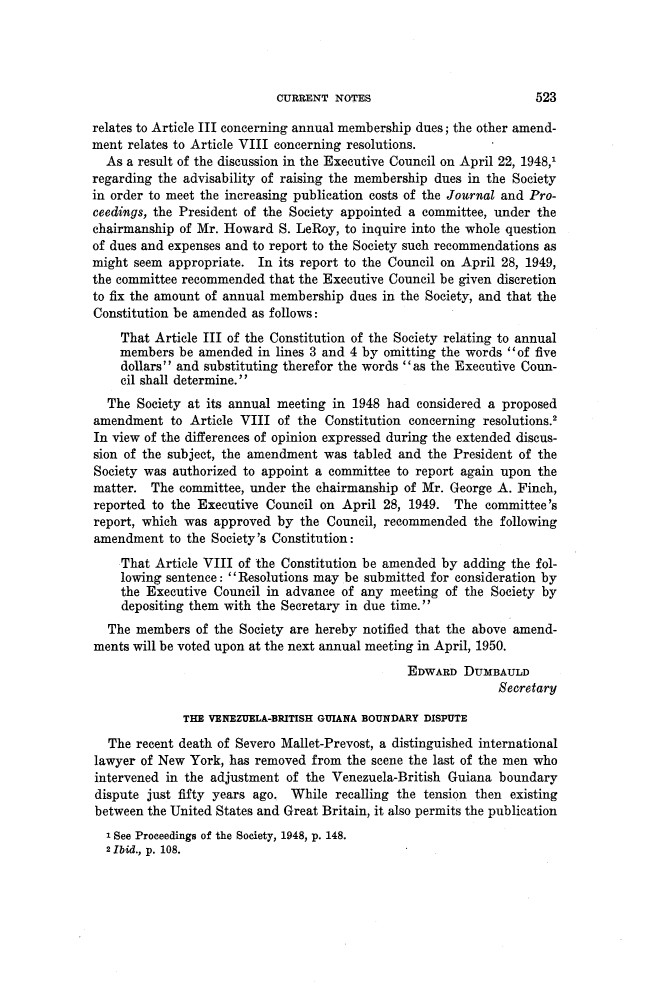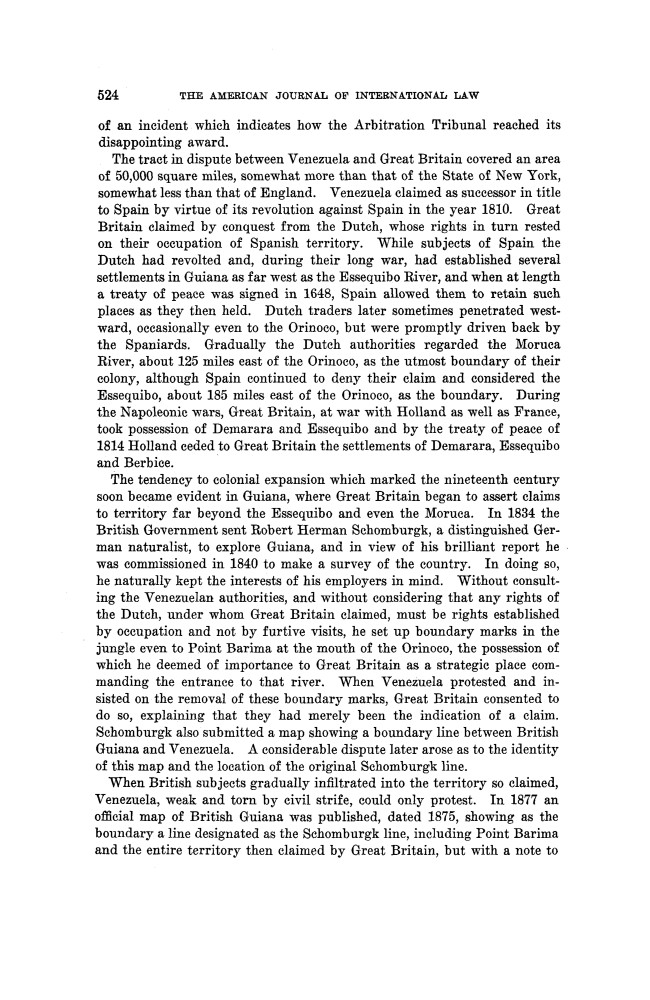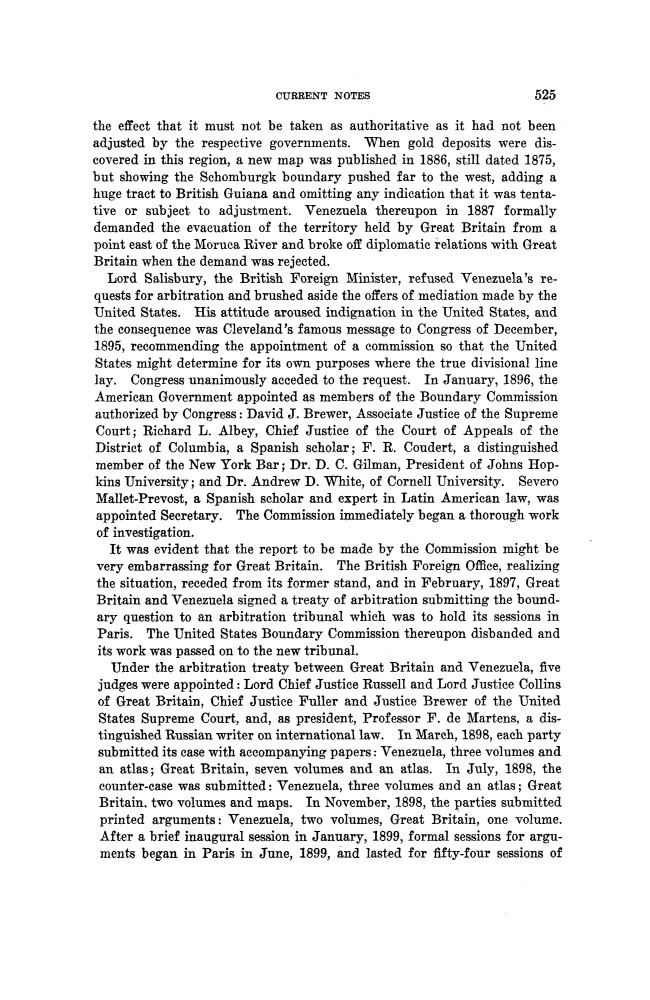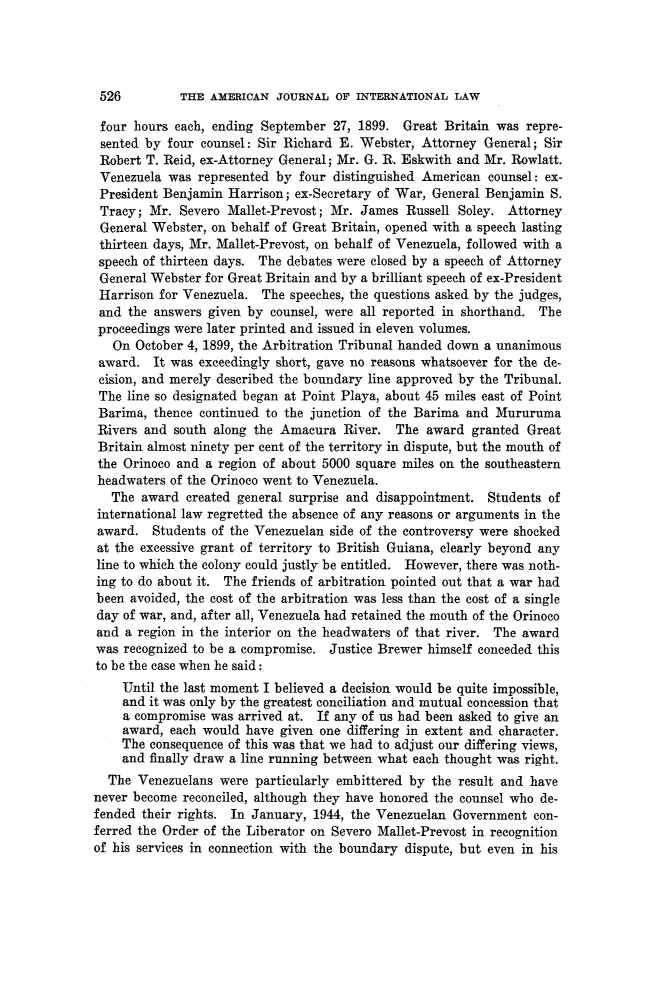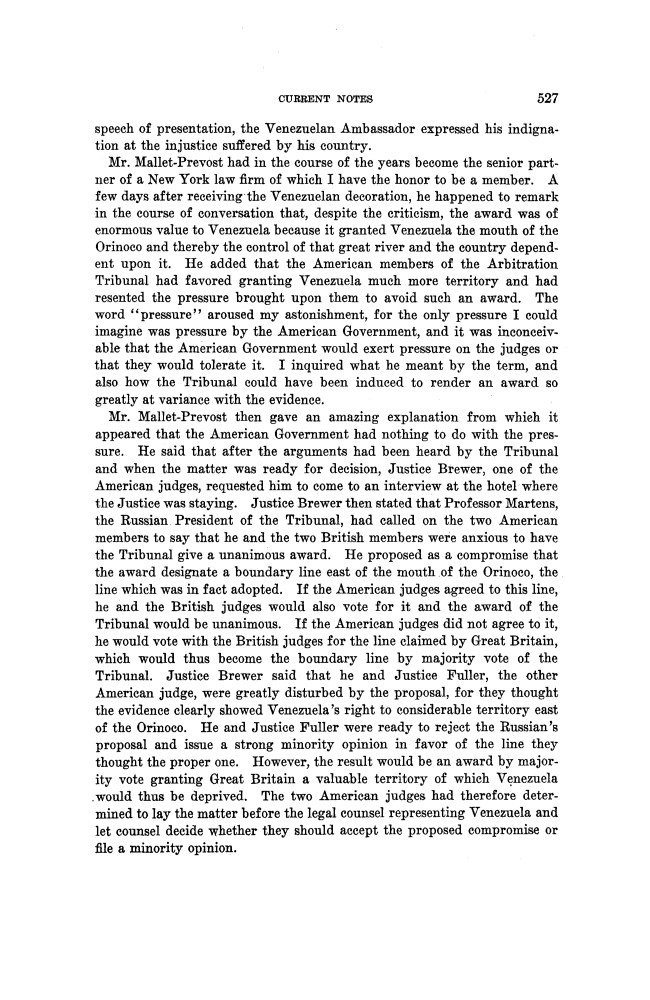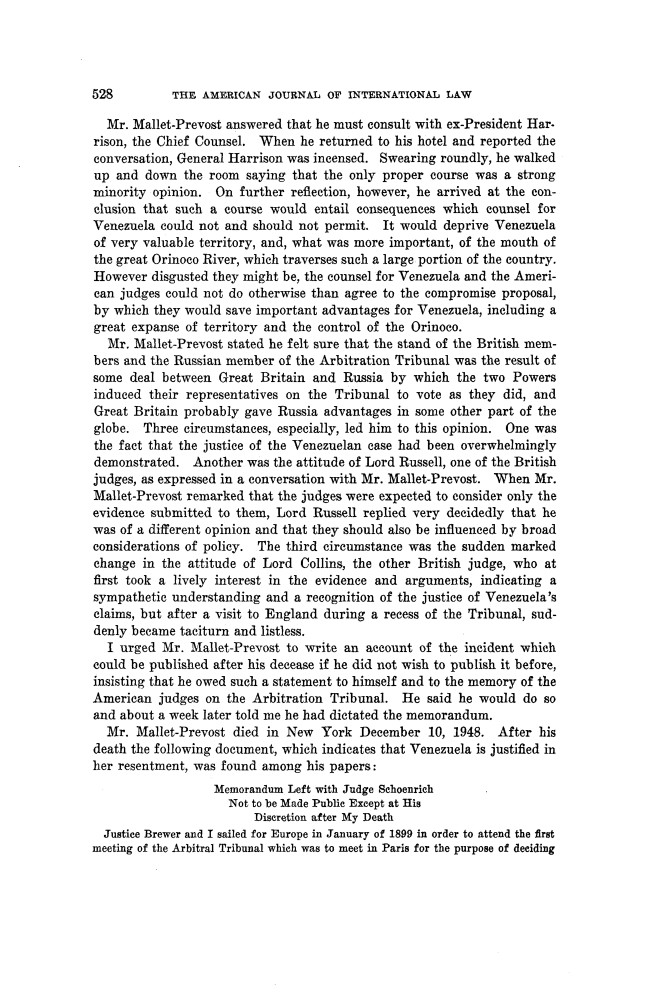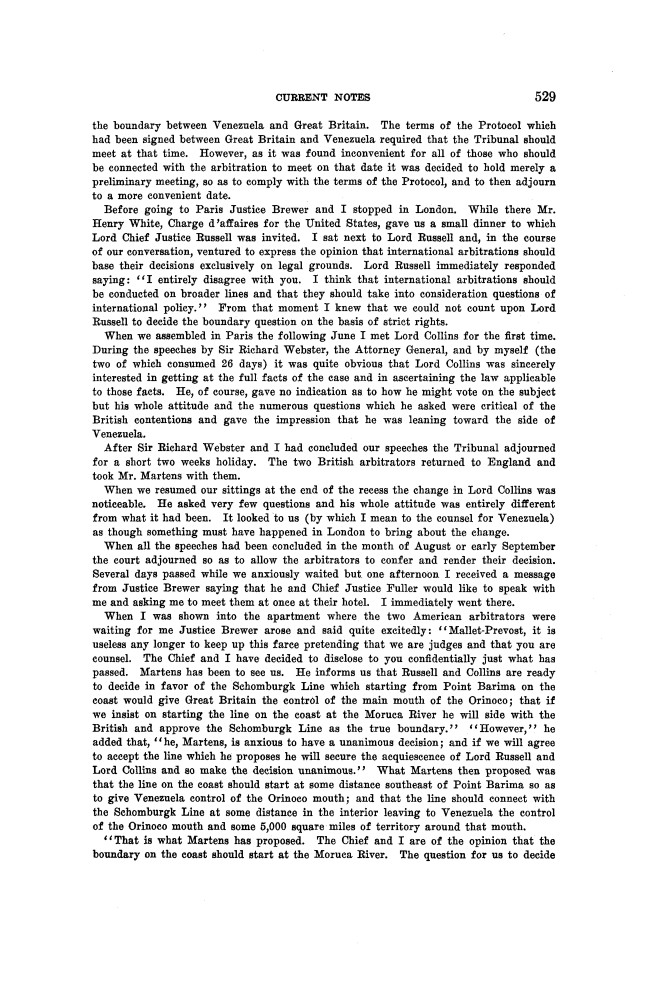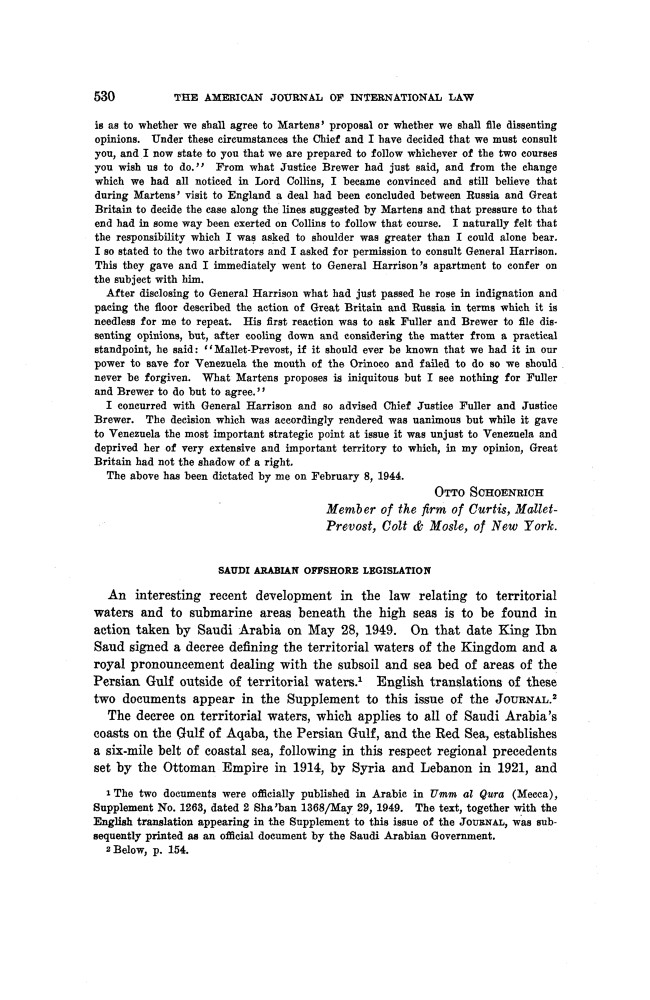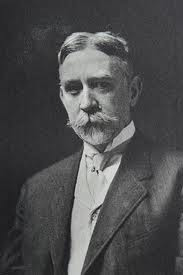
Ensartaos les presenta el documento original donde Severo Mallet-Prevost, en primera persona, cuenta la verdadera historia de lo que ocurrió en el Laudo Arbitral de París de 1899, donde Venezuela se vió despojada del territorio de la Guayana Esequiba. No es un recorte de periódico, o parte de un libro, o una carta perdida. Es, sorprendentemente, un «paper» formal de 1949, escrito por Otto Schobnrich (socio de Mallet-Prevost) en 1949, en una prestigiosa revista que aún se edita en EEUU.
……………………………………………………………………………………..
American Journal of International Law, Volume 43, Issue 3, July 1949, pp. 523-530
DOI: https://doi.org/10.1017/S0002930000092691
(Traducción libre de JCVF)
LA DISPUTA FRONTERIZA VENEZUELA-GUAYANA BRITÁNICA
La reciente muerte de Severo Mallet-Prevost, distinguido abogado internacional de Nueva York, ha sacado de escena al último de los hombres que intervinieron en el ajuste del diferendo fronterizo entre Venezuela y la Guayana Británica hace apenas cincuenta años. Al recordar la tensión entonces existente entre Estados Unidos y Gran Bretaña, también permite la publicación de un incidente que indica cómo el Tribunal de Arbitraje llegó a su decepcionante sentencia.
La zona en disputa entre Venezuela y Gran Bretaña cubría una superficie de 50.000 millas cuadradas, algo más que la del Estado de Nueva York, algo menos que la de Inglaterra. Venezuela se reclamó como sucesora de España en virtud de su revolución contra España en el año 1810. Gran Bretaña reclamó por conquista a los holandeses, cuyos derechos a su vez descansaban en su ocupación del territorio español. Mientras súbditos de España, los holandeses se habían rebelado y, durante su larga guerra, habían establecido varios asentamientos en la Guayana hasta el río Esequibo, y cuando finalmente se firmó un tratado de paz en 1648, España les permitió conservar los lugares que ocupaban entonces. Posteriormente, los comerciantes holandeses penetraron en ocasiones hacia el oeste, en ocasiones incluso hasta el Orinoco, pero pronto fueron rechazados por los españoles. Gradualmente, las autoridades holandesas consideraron el río Moruca, a unas 125 millas al este del Orinoco, como el límite máximo de su colonia, aunque España continuó negando su reclamo y consideró el Esequibo, a unas 185 millas al este del Orinoco, como el límite. Durante las guerras napoleónicas, Gran Bretaña, en guerra tanto con Holanda como con Francia, tomó posesión de Demarara y Esequibo y, mediante el tratado de paz de 1814, Holanda cedió a Gran Bretaña los asentamientos de Demarara, Esequibo y Berbice.
La tendencia a la expansión colonial que caracterizó el siglo diecinueve pronto se hizo evidente en la Guayana, donde Gran Bretaña comenzó a reclamar territorios mucho más allá del Esequibo e incluso del Moruco. En 1834, el gobierno británico envió a Robert Herman Schomburgk, un distinguido naturalista alemán, a explorar la Guayana y, en vista de su brillante informe, en 1840 recibió el encargo de realizar un estudio del país. Naturalmente, al hacerlo tuvo en cuenta los intereses de sus empleadores. Sin consultar a las autoridades venezolanas, y sin considerar que los derechos de los holandeses, que Gran Bretaña reivindicaba, debían ser derechos establecidos por la ocupación y no por visitas furtivas, estableció marcas fronterizas en la selva incluso hasta Punta Barima en la desembocadura del Orinoco, cuya posesión consideraba importante para Gran Bretaña como lugar estratégico que dominaba la entrada a ese río. Cuando Venezuela protestó e insistió en la eliminación de estos hitos, Gran Bretaña consintió en hacerlo, explicando que habían sido simplemente la indicación de un reclamo. Schomburgk también presentó un mapa mostrando una línea fronteriza entre la Guayana Británica y Venezuela. Posteriormente surgió una considerable disputa sobre la identidad de este mapa y la ubicación de la línea Schomburgk original.
Cuando los súbditos británicos se infiltraron gradualmente en el territorio así reclamado, Venezuela, débil y desgarrada por el conflicto civil, sólo pudo protestar. En 1877 se publicó un mapa oficial de la Guayana Británica, fechado en 1875, mostrando como límite una línea designada como línea Schomburgk, que incluía Punta Barima y todo el territorio entonces reclamado por Gran Bretaña, pero con una nota en el sentido de que no debía tomarse como oficial ya que no había sido ajustado por los respectivos gobiernos. Cuando se descubrieron depósitos de oro en esta región, se publicó un nuevo mapa en 1886, todavía fechado en 1875, pero que mostraba el límite de Schomburgk extendido hacia el oeste, agregando una enorme extensión a la Guayana Británica y omitiendo cualquier indicación de que fuera tentativo o sujeto a ajuste. Posteriormente, en 1887, Venezuela exigió formalmente la evacuación del territorio controlado por Gran Bretaña desde un punto al este del Río Moruca y rompió relaciones diplomáticas con Gran Bretaña cuando la demanda fue rechazada.
Lord Salisbury, el Ministro de Asuntos Exteriores británico, rechazó las solicitudes de arbitraje de Venezuela y desestimó las ofertas de mediación hechas por Estados Unidos. Su actitud despertó indignación en los Estados Unidos, y la consecuencia fue el famoso mensaje de Cleveland al Congreso de diciembre de 1895, recomendando el nombramiento de una comisión para que los Estados Unidos pudiera determinar para sus propios fines dónde estaba la verdadera línea divisoria. El Congreso accedió por unanimidad a la solicitud. En enero de 1896, el Gobierno americano nombró miembros de la Comisión de Límites autorizada por el Congreso: David J. Brewer, Juez Asociado de la Corte Suprema; Richard L. Albey, Presidente del Tribunal de Apelaciones del Distrito de Columbia, un estudioso del español; F. R. Coudert, miembro distinguido del Colegio de Abogados de Nueva York; el Dr. D. C. Gilman, Presidente de la Universidad Johns Hopkins; y el Dr. Andrew D. White, de la Universidad de Cornell. Fue nombrado Secretario Severo Mallet-Prevost, españolista y experto en Derecho Latinoamericano. La Comisión inició inmediatamente un minucioso trabajo de investigación.
Era evidente que el informe que debía presentar la Comisión podría ser muy embarazoso para Gran Bretaña. El Ministerio de Asuntos Exteriores británico, al darse cuenta de la situación, abandonó su posición anterior y en febrero de 1897 Gran Bretaña y Venezuela firmaron un tratado de arbitraje sometiendo la cuestión de límites a un tribunal de arbitraje que celebraría sus sesiones en París. Acto seguido, la Comisión de Límites de los Estados Unidos se disolvió y su trabajo pasó al nuevo tribunal.
En virtud del tratado de arbitraje entre Gran Bretaña y Venezuela, se nombraron cinco
jueces: El Señor Presidente del Tribunal Supremo Russell y Lord Justice Collins de Gran Bretaña, el Presidente del Tribunal Supremo Fuller y el Magistrado Brewer de la Corte Suprema de los Estados Unidos y, como presidente, el Profesor F. de Martens, un distinguido escritor ruso sobre derecho internacional. En marzo de 1898, cada parte presentó su caso con los documentos adjuntos: Venezuela, tres volúmenes y un atlas; Gran Bretaña, siete volúmenes y un atlas. En julio de 1898 se presentó la réplica: Venezuela, tres tomos y un
atlas; Gran Bretaña, dos volúmenes y mapas. En noviembre de 1898 las partes presentaron
alegatos impresos: Venezuela, dos volúmenes, Gran Bretaña, un volumen. Después de una breve sesión inaugural en enero de 1899, las sesiones formales para argumentos comenzaron en París en junio de 1899 y duraron cincuenta y cuatro sesiones de cuatro horas cada una, terminando el 27 de septiembre de 1899. Gran Bretaña estuvo representada por cuatro abogados: Sir Richard E. Webster, Fiscal General; Sir Robert T. Reid, ex Fiscal General; Sr. G. R. Eskwith y Sr. Rowlatt. Venezuela estuvo representada por cuatro distinguidos abogados estadounidenses: el ex Presidente Benjamin Harrison; el ex Secretario de Guerra, General Benjamin S. Tracy; el Sr. Severo Mallet-Prevost; el Sr. James Russell Soley. El Fiscal General Webster, en nombre de Gran Bretaña, abrió con un discurso que duró trece días, el Sr. Mallet-Prevost, en representación de Venezuela, siguió con un discurso de trece días. Los debates fueron cerrados por un discurso del Fiscal General Webster por Gran Bretaña y por un brillante discurso del ex Presidente Harrison por Venezuela. Los discursos, las preguntas formuladas por los jueces y las respuestas dadas por los abogados, fueron todos resumidos taquigráficamente. Posteriormente, las actas se imprimieron y publicaron en once volúmenes.
El 4 de octubre de 1899 el Tribunal Arbitral dictó sentencia unánime. Era extremadamente breve, no daba motivo alguno para la decisión y simplemente describía la línea fronteriza aprobada por el Tribunal. La línea así designada comenzaba en Punta Playa, a unas 45 millas al este de Punta Barima, y desde allí continuaba hasta la unión de los ríos Barima y Mururuma y hacia el sur a lo largo del río Amacuro. El laudo concedió a Gran Bretaña casi el noventa por ciento del territorio en disputa, pero la desembocadura del Orinoco y una región de aproximadamente 5.000 millas cuadradas en las cabeceras sureste del Orinoco fueron para Venezuela.
La decisión generó sorpresa y decepción general. Los estudiantes de derecho internacional lamentaron la ausencia de motivos o argumentos en la sentencia. Los estudiosos del lado venezolano de la controversia se sorprendieron por la excesiva concesión de territorio a la Guayana Británica, claramente más allá de cualquier línea a la que la colonia pudiera tener derecho. Sin embargo, no había nada que hacer al respecto. Los amigos del arbitraje señalaron que se había evitado una guerra, el costo del arbitraje era menor que el costo de un solo día de guerra y, después de todo, Venezuela había conservado la desembocadura del Orinoco y una región del interior en las cabeceras de ese río. Se reconoció que el laudo era un compromiso. El propio Juez Brewer admitió que este era el caso cuando dijo:
Hasta el último momento creí que una decisión sería absolutamente imposible, y sólo mediante la mayor conciliación y concesión mutua se pudo llegar a un compromiso. Si a cualquiera de nosotros se nos hubiera pedido una decisión, cada uno lo habría otorgado de diferente magnitud y carácter. La consecuencia de esto fue que tuvimos que ajustar nuestros diferentes puntos de vista y, finalmente, trazar una línea entre lo que cada pensamiento era correcto.
Los venezolanos quedaron especialmente amargados por el resultado y nunca se reconciliaron, aunque sí honraron al abogado que defendió sus derechos. En enero de 1944, el Gobierno venezolano confirió la Orden del Libertador a Severo Mallet-Prevost en reconocimiento a sus servicios en relación con la disputa de límites, pero incluso en el discurso de presentación, el Embajador de Venezuela expresó su indignación por la injusticia que sufrió su país.
Con el paso de los años, el señor Mallet-Prevost se convirtió en socio principal de un bufete de abogados de Nueva York del que tengo el honor de ser miembro. A los pocos días de recibir la condecoración venezolana, se le ocurrió comentar en el curso de la conversación que, a pesar de las críticas, el laudo era de enorme valor para Venezuela porque le otorgaba la desembocadura del Orinoco y con ello el control de ese gran río y el país depende de ello. Añadió que los miembros estadounidenses del Tribunal de Arbitraje habían estado a favor de conceder a Venezuela mucho más territorio y habían resentido la presión ejercida sobre ellos para evitar tal laudo. La palabra «presión» despertó mi asombro, porque la única presión que podía imaginar era la presión del Gobierno Norteamericano, y era inconcebible que el Gobierno Norteamericano ejerciera presión sobre los jueces o que estos lo toleraran. Le pregunté qué quería decir con ese término y también cómo se pudo haber inducido al Tribunal a dictar un laudo que discrepaba tanto de las pruebas.
El Sr. Mallet Prevost dio entonces una sorprendente explicación de la que parecía que el Gobierno Norteamericano no tenía nada que ver con la presión. Dijo que después de que el Tribunal escuchó los argumentos y cuando el asunto estuvo listo para decidir, el Juez Brewer, uno de los jueces estadounidenses, le pidió que fuera a una entrevista en el hotel donde se alojaba el Juez. El Juez Brewer declaró entonces que el Profesor Martens, Presidente Ruso del Tribunal, había pedido a los dos miembros estadounidenses que dijeran que él y los dos miembros británicos estaban ansiosos de que el Tribunal dictara una sentencia unánime. Propuso como solución de compromiso que la sentencia designara una línea fronteriza al este de la desembocadura del Orinoco, línea que de hecho fue adoptada. Si los jueces estadounidenses aceptaban esta línea, él y los jueces británicos también votarían a favor y el fallo del Tribunal sería unánime. Si los jueces estadounidenses no estaban de acuerdo, votaría con los jueces británicos por la línea reclamada por Gran Bretaña, que se convertiría así en la línea fronteriza por mayoría de votos del Tribunal. El Juez Brewer dijo que él y el Juez Fuller, el otro Juez estadounidense, estaban muy perturbados por la propuesta, porque pensaban que las pruebas mostraban claramente el derecho de Venezuela a un territorio considerable al este del Orinoco. Él y el Juez Fuller estaban dispuestos a rechazar la propuesta rusa y emitir una fuerte opinión minoritaria a favor de la línea que consideraban adecuada. Sin embargo, el resultado sería una concesión por mayoría de votos que concedería a Gran Bretaña un valioso territorio del que Venezuela quedaría privada. Por lo tanto, los dos jueces estadounidenses habían decidido plantear el asunto ante el asesor legal que representaba a Venezuela y dejar que el abogado decidiera si debían aceptar el compromiso propuesto o presentar una opinión minoritaria.
El señor Mallet-Prevost respondió que debía consultar con el ex-Presidente Harrison, Abogado Principal. Cuando regresó a su hotel e informó de la conversación, el General Harrison estaba indignado. Maldiciendo rotundamente, caminó de un lado a otro de la habitación diciendo que el único camino correcto era una fuerte opinión minoritaria. Sin embargo, tras una mayor reflexión, llegó a la conclusión de que tal proceder entrañaría consecuencias que el abogado de Venezuela no podía ni debía permitir. Privaría a Venezuela de un territorio muy valioso y, lo que era más importante, de la desembocadura del gran río Orinoco, que atraviesa una porción tan grande del país. Por muy disgustados que estuvieran, los abogados de Venezuela y los jueces estadounidenses no pudieron hacer otra cosa que aceptar la propuesta de compromiso, mediante la cual ahorrarían importantes ventajas para Venezuela, incluida una gran extensión de territorio y el control del Orinoco.
El Sr. Mallet Prevost declaró que estaba seguro de que la posición de los miembros británicos y del miembro ruso del Tribunal de Arbitraje era el resultado de algún acuerdo entre Gran Bretaña y Rusia mediante el cual las dos Potencias indujeron a sus representantes en el Tribunal a votar como lo hicieron, y Gran Bretaña probablemente dio a Rusia ventajas en alguna otra parte del mundo. Tres circunstancias, especialmente, le llevaron a esta opinión. Uno fue el hecho de que se había demostrado abrumadoramente la justicia del caso venezolano. Otra fue la actitud de Lord Russell, uno de los jueces británicos, expresada en una conversación con el señor Mallet-Prevost. Cuando Mallet-Prevost remarcó que se esperaba que los jueces consideraran sólo las pruebas que se les presentaran, Lord Russell respondió muy decididamente que tenía una opinión diferente y que también deberían ser influenciados por consideraciones generales de política. La tercera circunstancia fue el repentino y marcado cambio en la actitud de Lord Collins, el otro Juez británico, quien al principio mostró un vivo interés en las pruebas y los argumentos, indicando una comprensión empática y un reconocimiento de la justicia de los reclamos de Venezuela, pero después de una visita a Inglaterra durante un receso del Tribunal, de repente se volvió taciturno y apático.
Insté al Sr. Mallet-Prevost a escribir un relato del incidente que podría publicarse después de su fallecimiento si no deseaba publicarlo antes, insistiendo en que se debía tal declaración a sí mismo y a la memoria de los jueces norteamericanos en el Tribunal de Arbitraje. Dijo que así lo haría y aproximadamente una semana después me dijo que había dictado el memorando.
El señor Mallet-Prevost murió en Nueva York el 10 de diciembre de 1948. Después de su muerte se encontró entre sus papeles el siguiente documento, que indica que Venezuela está justificada en su resentimiento:
Memorando entregado al Juez Schoenrich
No se hará público excepto a su
discreción después de mi muerte
El Juez Brewer y yo navegamos hacia Europa en enero de 1899 para asistir a la primera reunión del Tribunal Arbitral que se reuniría en París con el propósito de decidir la frontera entre Venezuela y Gran Bretaña. Los términos del Protocolo firmado entre Gran Bretaña y Venezuela exigían que el Tribunal se reuniera en ese momento. Sin embargo, como se consideró inconveniente para todos los que debían estar relacionados con el arbitraje reunirse en esa fecha, se decidió celebrar una reunión meramente preliminar, para cumplir con los términos del Protocolo, y luego suspenderla para una fecha más conveniente.
Antes de ir a París el Juez Brewer y yo paramos en Londres. Mientras estábamos allí, el Sr. Henry White, Encargado de Negocios de los Estados Unidos, nos ofreció una pequeña cena a la que estaba invitado el Presidente del Tribunal Supremo Russell. Me senté junto a Lord Russell y, en el curso de nuestra conversación, me aventuré a expresar la opinión de que los arbitrajes internacionales deberían basar sus decisiones exclusivamente en fundamentos jurídicos. Lord Russell respondió inmediatamente diciendo: «Estoy totalmente en desacuerdo con usted. Creo que los arbitrajes internacionales deberían realizarse en líneas más amplias y que deberían tomar en consideración cuestiones de política internacional». Desde ese momento supe que no podíamos contar con Lord Russell para decidir la cuestión de los límites sobre la base de derechos estrictos.
Cuando nos reunimos en París en junio siguiente, conocí a Lord Collins por primera vez. Durante los discursos de Sir Richard Webster, el Fiscal General y el mío (los dos duraron 26 días) fue bastante obvio que Lord Collins estaba sinceramente interesado en conocer todos los hechos del caso y en determinar la ley aplicable a esos hechos. Él, por supuesto, no dio ninguna indicación sobre cómo votaría sobre el tema, pero toda su actitud y las numerosas preguntas que formuló fueron críticas de las posturas británicas y dieron la impresión de que se inclinaba hacia el lado de Venezuela.
Después de que Sir Richard Webster y yo hubiéramos concluido nuestros discursos, el Tribunal levantó la sesión por un breve feriado de dos semanas. Los dos árbitros británicos regresaron a Inglaterra y se llevaron al señor Martens con ellos.
Cuando reanudamos nuestras sesiones al final del receso, el cambio en Lord Collins era notable. Hizo muy pocas preguntas y toda su actitud fue completamente diferente de lo que había sido. Nos pareció (me refiero al abogado de Venezuela) como si algo debía haber sucedido en Londres para provocar el cambio.
Cuando todos los discursos concluyeron en el mes de agosto o principios de septiembre, el tribunal levantó la sesión para permitir que los árbitros consultaran y tomaran su decisión. Pasaron varios días mientras esperábamos ansiosamente, pero una tarde recibí un mensaje del Juez Brewer diciendo que él y el Presidente del Tribunal Supremo Fuller querían hablar conmigo y pedirme que los reuniera inmediatamente en su hotel. Inmediatamente fui allí.
Cuando me condujeron al apartamento donde me esperaban los dos árbitros norteamericanos, el Juez Brewer se levantó y dijo muy emocionado: «Mallet-Prevost, es inútil continuar con esta farsa de pretender que nosotros somos jueces y usted es abogado. El Jefe y yo hemos decidido revelarle confidencialmente lo sucedido. Martens ha venido a vernos y nos informa que Russell y Collins están dispuestos a decidir a favor de la línea Schomburgk, que partiendo de Punta Barima en la costa daría a Gran Bretaña el control de la desembocadura principal del Orinoco; que si insistimos en iniciar la línea en la costa en el Río Moruca se pondrá del lado de los británicos y aprobará la Línea Schomburgk como la verdadera frontera». «Sin embargo», añadió que «él, Martens, está ansioso por tener una decisión unánime; y si aceptamos la línea que propone, obtendrá la aquiescencia de Lord Russell y Lord Collins y así se tomará la decisión por unanimidad». Lo que Martens propuso entonces fue que la línea en la costa comenzara a cierta distancia al sureste de Punta Barima para darle a Venezuela el control de la desembocadura del Orinoco; y que la línea debería conectarse con la Línea Schomburgk a cierta distancia en el interior, dejando a Venezuela el control de la desembocadura del Orinoco y unas 5.000 millas cuadradas de territorio alrededor de esa desembocadura.
«Eso es lo que Martens ha propuesto. El Jefe y yo somos de la opinión de que el límite en la costa debería comenzar en el Río Moruca. La cuestión que debemos decidir es si aceptaremos la propuesta de Martens o si presentaremos opiniones disidentes. En estas circunstancias, el Jefe y yo hemos decidido que debemos consultarlo, y ahora le declaro que estamos dispuestos a seguir cualquiera de los dos cursos que usted desee que tomemos». Por lo que acababa de decir el Juez Brewer y por el cambio que todos habíamos notado en Lord Collins, me convencí, y sigo creyendo, de que durante la visita de Martens a Inglaterra se había llegado a un acuerdo entre Rusia y Gran Bretaña para decidir el caso siguiendo las líneas sugeridas por Martens y que de alguna manera se había ejercido presión con ese fin sobre Collins para que siguiera ese camino. Naturalmente, sentí que la responsabilidad que se me pedía que asumiera era mayor de la que yo solo podía soportar. Así se lo dije a los dos árbitros y pedí permiso para consultar al General Harrison. Me lo dieron e inmediatamente fui al apartamento del General Harrison para conversar sobre el tema con él.
Después de revelarle al General Harrison lo que acababa de suceder, se levantó indignado
y paseándose de un lado a otro describió la acción de Gran Bretaña y Rusia en términos que
no hace falta que repita. Su primera reacción fue pedir a Fuller y Brewer que presentaran
opiniones disidentes, pero, después de calmarse y considerar el asunto desde un punto de
vista práctico, dijo: «Mallet-Prevost, si alguna vez se supiera que teníamos en nuestro poder salvar para Venezuela la desembocadura del Orinoco y no lo hicimos, nunca deberíamos ser perdonados. Lo que propone Martens es inicuo, pero no veo que Fuller y Brewer no puedan hacer nada más que estar de acuerdo».
Estuve de acuerdo con el General Harrison y así se lo informé al Presidente del Tribunal Supremo Fuller y al Juez Brewer. La decisión que se adoptó en consecuencia fue unánime, pero si bien le dio a Venezuela el punto estratégico más importante en cuestión, fue injusta para Venezuela y la privó de un territorio muy extenso e importante al que, en mi opinión, Gran Bretaña no tenía ni la más mínima sombra de derecho.
Lo anterior ha sido dictado por mí el 8 de febrero de 1944.
OTTO SCHOENRICH
Miembro de la firma Curtis, Mallet-Prevost, Colt & Mosle, de Nueva York.
………………………………………………………………………
American Journal of International Law, Volume 43, Issue 3, July 1949, pp. 523-530
DOI: https://doi.org/10.1017/S0002930000092691
THE VENEZUELA-BRITISH GUIANA BOUNDARY DISPUTE
The recent death of Severo Mallet-Prevost, a distinguished international lawyer of New York, has removed from the scene the last of the men who intervened in the adjustment of the Venezuela-British Guiana boundary dispute just fifty years ago. While recalling the tension then existing between the United States and Great Britain, it also permits the publication of an incident which indicates how the Arbitration Tribunal reached its disappointing award.
The tract in dispute between Venezuela and Great Britain covered an area of 50,000 square miles, somewhat more than that of the State of New York, somewhat less than that of England. Venezuela claimed as successor in title to Spain by virtue of its revolution against Spain in the year 1810. Great Britain claimed by conquest from the Dutch, whose rights in turn rested on their occupation of Spanish territory. While subjects of Spain the Dutch had revolted and, during their long war, had established several settlements in Guiana as far west as the Essequibo River, and when at length a treaty of peace was signed in 1648, Spain allowed them to retain such places as they then held. Dutch traders later sometimes penetrated west-ward, occasionally even to the Orinoco, but were promptly driven back by the Spaniards. Gradually the Dutch authorities regarded the Moruca River, about 125 miles east of the Orinoco, as the utmost boundary of their colony, although Spain continued to deny their claim and considered the Essequibo, about 185 miles east of the Orinoco, as the boundary. During the Napoleonic wars, Great Britain, at war with Holland as well as France, took possession of Demarara and Essequibo and by the treaty of peace of 1814 Holland ceded to Great Britain the settlements of Demarara, Essequibo and Berbice.
The tendency to colonial expansion which marked the nineteenth century soon became evident in Guiana, where Great Britain began to assert claims to territory far beyond the Essequibo and even the Moruca. In 1834 the British Government sent Robert Herman Schomburgk, a distinguished German naturalist, to explore Guiana, and in view of his brilliant report he was commissioned in 1840 to make a survey of the country. In doing so, he naturally kept the interests of his employers in mind. Without consulting the Venezuelan authorities, and without considering that any rights of the Dutch, under whom Great Britain claimed, must be rights established by occupation and not by furtive visits, he set up boundary marks in the jungle even to Point Barima at the mouth of the Orinoco, the possession of which he deemed of importance to Great Britain as a strategic place commanding the entrance to that river. When Venezuela protested and insisted on the removal of these boundary marks, Great Britain consented to do so, explaining that they had merely been the indication of a claim. Schomburgk also submitted a map showing a boundary line between British Guiana and Venezuela. A considerable dispute later arose as to the identity of this map and the location of the original Schomburgk line.
When British subjects gradually infiltrated into the territory so claimed, Venezuela, weak and torn by civil strife, could only protest. In 1877 an official map of British Guiana was published, dated 1875, showing as the boundary a line designated as the Schomburgk line, including Point Barima and the entire territory then claimed by Great Britain, but with a note to the effect that it must not be taken as authoritative as it had not been adjusted by the respective governments. When gold deposits were discovered in this region, a new map was published in 1886, still dated 1875, but showing the Schomburgk boundary pushed far to the west, adding a huge tract to British Guiana and omitting any indication that it was tentative or subject to adjustment. Venezuela thereupon in 1887 formally demanded the evacuation of the territory held by Great Britain from a point east of the Moruca Eiver and broke off diplomatic relations with Great Britain when the demand was rejected.
Lord Salisbury, the British Foreign Minister, refused Venezuela’s requests for arbitration and brushed aside the offers of mediation made by the United States. His attitude aroused indignation in the United States, and the consequence was Cleveland’s famous message to Congress of December, 1895, recommending the appointment of a commission so that the United States might determine for its own purposes where the true divisional line lay. Congress unanimously acceded to the request. In January, 1896, the American Government appointed as members of the Boundary Commission authorized by Congress: David J. Brewer, Associate Justice of the Supreme Court; Richard L. Albey, Chief Justice of the Court of Appeals of the District of Columbia, a Spanish scholar; F . R. Coudert, a distinguished member of the New York Bar; Dr. D. C. Gilman, President of Johns Hopkins University; and Dr. Andrew D. White, of Cornell University. Severo Mallet-Prevost, a Spanish scholar and expert in Latin American law, was appointed Secretary. The Commission immediately began a thorough work of investigation.
It was evident that the report to be made by the Commission might be very embarrassing for Great Britain. The British Foreign Office, realizing the situation, receded from its former stand, and in February, 1897, Great Britain and Venezuela signed a treaty of arbitration submitting the boundary question to an arbitration tribunal which was to hold its sessions in Paris. The United States Boundary Commission thereupon disbanded and its work was passed on to the new tribunal.
Under the arbitration treaty between Great Britain and Venezuela, five judges were appointed: Lord Chief Justice Russell and Lord Justice Collins of Great Britain, Chief Justice Fuller and Justice Brewer of the United States Supreme Court, and, as president, Professor F. de Martens, a distinguished Russian writer on international law. In March, 1898, each party submitted its case with accompanying papers: Venezuela, three volumes and an atlas; Great Britain, seven volumes and an atlas. In July, 1898, the counter-case was submitted: Venezuela, three volumes and an atlas; Great Britain, two volumes and maps. In November, 1898, the parties submitted printed arguments: Venezuela, two volumes, Great Britain, one volume. After a brief inaugural session in January, 1899, formal sessions for arguments began in Paris in June, 1899, and lasted for fifty-four sessions of four hours each, ending September 27, 1899. Great Britain was represented by four counsel: Sir Richard E. «Webster, Attorney General; Sir Robert T. Reid, ex-Attorney General; Mr. G. R. Eskwith and Mr. Rowlatt. Venezuela was represented by four distinguished American counsel: ex-President Benjamin Harrison; ex-Secretary of War, General Benjamin S. Tracy; Mr. Severo Mallet-Prevost; Mr. James Russell Soley. Attorney General Webster, on behalf of Great Britain, opened with a speech lasting thirteen days, Mr. Mallet-Prevost, on behalf of Venezuela, followed with a speech of thirteen days. The debates were closed by a speech of Attorney General Webster for Great Britain and by a brilliant speech of ex-President Harrison for Venezuela. The speeches, the questions asked by the judges, and the answers given by counsel, were all reported in shorthand. The proceedings were later printed and issued in eleven volumes.
On October 4, 1899, the Arbitration Tribunal handed down a unanimous award. It was exceedingly short, gave no reasons whatsoever for the decision, and merely described the boundary line approved by the Tribunal. The line so designated began at Point Playa, about 45 miles east of Point Barima, thence continued to the junction of the Barima and Mururuma Rivers and south along the Amacura River. The award granted Great Britain almost ninety per cent of the territory in dispute, but the mouth of the Orinoco and a region of about 5000 square miles on the southeastern headwaters of the Orinoco went to Venezuela.
The award created general surprise and disappointment. Students of international law regretted the absence of any reasons or arguments in the award. Students of the Venezuelan side of the controversy were shocked at the excessive grant of territory to British Guiana, clearly beyond any line to which the colony could justly be entitled. However, there was nothing to do about it. The friends of arbitration pointed out that a war had been avoided, the cost of the arbitration was less than the cost of a single day of war, and, after all, Venezuela had retained the mouth of the Orinoco and a region in the interior on the headwaters of that river. The award was recognized to be a compromise. Justice Brewer himself conceded this to be the case when he said:
Until the last moment I believed a decision would be quite impossible, and it was only by the greatest conciliation and mutual concession that a compromise was arrived at. If any of us had been asked to give an award, each would have given one differing in extent and character. The consequence of this was that we had to adjust our differing views, and finally draw a line running between what each thought was right.
The Venezuelans were particularly embittered by the result and have never become reconciled, although they have honored the counsel who defended their rights. In January, 1944, the Venezuelan Government conferred the Order of the Liberator on Severo Mallet-Prevost in recognition of his services in connection with the boundary dispute, but even in his speech of presentation, the Venezuelan Ambassador expressed his indignation at the injustice suffered by his country.
Mr. Mallet-Prevost had in the course of the years become the senior partner of a New York law firm of which I have the honor to be a member. A few days after receiving the Venezuelan decoration, he happened to remark in the course of conversation that, despite the criticism, the award was of enormous value to Venezuela because it granted Venezuela the mouth of the Orinoco and thereby the control of that great river and the country dependent upon it. He added that the American members of the Arbitration Tribunal had favored granting Venezuela much more territory and had resented the pressure brought upon them to avoid such an award. The word «pressure» aroused my astonishment, for the only pressure I could imagine was pressure by the American Government, and it was inconceivable that the American Government would exert pressure on the judges or that they would tolerate it. I inquired what he meant by the term, and also how the Tribunal could have been induced to render an award so greatly at variance with the evidence.
Mr. Mallet-Prevost then gave an amazing explanation from which it appeared that the American Government had nothing to do with the pressure. He said that after the arguments had been heard by the Tribunal and when the matter was ready for decision, Justice Brewer, one of the American judges, requested him to come to an interview at the hotel where the Justice was staying. Justice Brewer then stated that Professor Martens, the Russian President of the Tribunal, had called on the two American members to say that he and the two British members were anxious to have the Tribunal give a unanimous award. He proposed as a compromise that the award designate a boundary line east of the mouth of the Orinoco, the line which was in fact adopted. If the American judges agreed to this line, he and the British judges would also vote for it and the award of the Tribunal would be unanimous. If the American judges did not agree to it, he would vote with the British judges for the line claimed by Great Britain, which would thus become the boundary line by majority vote of the Tribunal. Justice Brewer said that he and Justice Fuller, the other American judge, were greatly disturbed by the proposal, for they thought the evidence clearly showed Venezuela’s right to considerable territory east of the Orinoco. He and Justice Fuller were ready to reject the Russian’s proposal and issue a strong minority opinion in favor of the line they thought the proper one. However, the result would be an award by majority vote granting Great Britain a valuable territory of which Venezuela would thus be deprived. The two American judges had therefore determined to lay the matter before the legal counsel representing Venezuela and let counsel decide whether they should accept the proposed compromise or
file a minority opinion.
Mr. Mallet-Prevost answered that he must consult with ex-President Harrison, the Chief Counsel. When he returned to his hotel and reported the conversation, General Harrison was incensed. Swearing roundly, he walked up and down the room saying that the only proper course was a strong minority opinion. On further reflection, however, he arrived at the conclusion that such a course would entail consequences which counsel for Venezuela could not and should not permit. It would deprive Venezuela of very valuable territory, and, what was more important, of the mouth of the great Orinoco River, which traverses such a large portion of the country. However disgusted they might be, the counsel for Venezuela and the American judges could not do otherwise than agree to the compromise proposal, by which they would save important advantages for Venezuela, including a great expanse of territory and the control of the Orinoco.
Mr. Mallet-Prevost stated he felt sure that the stand of the British members and the Russian member of the Arbitration Tribunal was the result of some deal between Great Britain and Russia by which the two Powers induced their representatives on the Tribunal to vote as they did, and Great Britain probably gave Russia advantages in some other part of the globe. Three circumstances, especially, led him to this opinion. One was the fact that the justice of the Venezuelan case had been overwhelmingly demonstrated. Another was the attitude of Lord Russell, one of the British judges, as expressed in a conversation with Mr. Mallet-Prevost. When Mr. Mallet-Prevost remarked that the judges were expected to consider only the evidence submitted to them, Lord Russell replied very decidedly that he was of a different opinion and that they should also be influenced by broad considerations of policy. The third circumstance was the sudden marked change in the attitude of Lord Collins, the other British judge, who at first took a lively interest in the evidence and arguments, indicating a sympathetic understanding and a recognition of the justice of Venezuela’s claims, but after a visit to England during a recess of the Tribunal, suddenly became taciturn and listless.
I urged Mr. Mallet-Prevost to write an account of the incident which could be published after his decease if he did not wish to publish it before, insisting that he owed such a statement to himself and to the memory of the American judges on the Arbitration Tribunal. He said he would do so and about a week later told me he had dictated the memorandum. Mr. Mallet-Prevost died in New York December 10, 1948. After his death the following document, which indicates that Venezuela is justified in her resentment, was found among his papers:
Memorandum Left with Judge Schoenrich
Not to be Made Public Except at His
Discretion after My Death
Justice Brewer and I sailed for Europe in January of 1899 in order to attend the first meeting of the Arbitral Tribunal which was to meet in Paris for the purpose of deciding the boundary between Venezuela and Great Britain. The terms of the Protocol which had been signed between Great Britain and Venezuela required that the Tribunal should meet a t that time. However, as it was found inconvenient for all of those who should be connected with the arbitration to meet on that date it was decided to hold merely a preliminary meeting, so as to comply with the terms of the Protocol, and to then adjourn to a more convenient date.
Before going to Paris Justice Brewer and I stopped in London. While there Mr. Henry White, Charge d’affaires for the United States, gave us a small dinner to which Lord Chief Justice Russell was invited. I sat next to Lord Russell and, in the course of our conversation, ventured to express the opinion that international arbitrations should base their decisions exclusively on legal grounds. Lord Russell immediately responded saying: «I entirely disagree with you. I think that international arbitrations should be conducted on broader lines and that they should take into consideration questions of international policy.» From that moment I knew that we could not count upon Lord Russell to decide the boundary question on the basis of strict rights.
When we assembled in Paris the following June I met Lord Collins for the first time. During the speeches by Sir Richard Webster, the Attorney General, and by myself (the two of which consumed 26 days) it was quite obvious that Lord Collins was sincerely interested in getting at the full facts of the case and in ascertaining the law applicable to those facts. He, of course, gave no indication as to how he might vote on the subject but his whole attitude and the numerous questions which he asked were critical of the British contentions and gave the impression that he was leaning toward the side of Venezuela.
After Sir Richard Webster and I had concluded our speeches the Tribunal adjourned for a short two weeks holiday. The two British arbitrators returned to England and took Mr. Martens with them.
When we resumed our sittings at the end of the recess the change in Lord Collins was noticeable. He asked very few questions and his whole attitude was entirely different from what it had been. It looked to us (by which I mean to the counsel for Venezuela) as though something must have happened in London to bring about the change.
When all the speeches had been concluded in the month of August or early September the court adjourned so as to allow the arbitrators to confer and render their decision. Several days passed while we anxiously waited but one afternoon I received a message from Justice Brewer saying that he and Chief Justice Puller would like to speak with me and asking me to meet them at once at their hotel. I immediately went there.
When I was shown into the apartment where the two American arbitrators were waiting for me Justice Brewer arose and said quite excitedly: «Mallet-Prevost, it is useless any longer to keep up this farce pretending that we are judges and that you are counsel. The Chief and I have decided to disclose to you confidentially just what has passed. Martens has been to see us. He informs us that Russell and Collins are ready to decide in favor of the Schomburgk Line which starting from Point Barima on the coast would give Great Britain the control of the main mouth of the Orinoco; that if we insist on starting the line on the coast at the Moruca River he will side with the British and approve the Schomburgk Line as the true boundary.» «However,» he added that, «he, Martens, is anxious to have a unanimous decision; and if we will agree to accept the line which he proposes he will secure the acquiescence of Lord Russell and Lord Collins and so make the decision unanimous.» What Martens then proposed was that the line on the coast should start at some distance southeast of Point Barima so as to give Venezuela control of the Orinoco mouth; and that the line should connect with the Schomburgk Line at some distance in the interior leaving to Venezuela the control of the Orinoco mouth and some 5,000 square miles of territory around that mouth.
«That is what Martens has proposed. The Chief and I are of the opinion that the boundary on the coast should start at the Moruca River. The question for us to decide is as to whether we shall agree to Martens’ proposal or whether we shall file dissenting opinions. Under these circumstances the Chief and I have decided that we must consult you, and I now state to you that we are prepared to follow whichever of the two courses you wish us to do.» From what Justice Brewer had just said, and from the change which we had all noticed in Lord Collins, I became convinced and still believe that during Martens’ visit to England a deal had been concluded between Russia and Great Britain to decide the case along the lines suggested by Martens and that pressure to that end had in some way been exerted on Collins to follow that course. I naturally felt that the responsibility which I was asked to shoulder was greater than I could alone bear. I so stated to the two arbitrators and I asked for permission to consult General Harrison. This they gave and I immediately went to General Harrison’s apartment to confer on the subject with him.
After disclosing to General Harrison what had just passed he rose in indignation and pacing the floor described the action of Great Britain and Russia in terms which it is needless for me to repeat. His first reaction was to ask Fuller and Brewer to file dissenting opinions, but, after cooling down and considering the matter from a practical standpoint, he said: «Mallet-Prevost, if it should ever be known that we had it in our power to save for Venezuela the mouth of the Orinoco and failed to do so we should never be forgiven. What Martens proposes is iniquitous but I see nothing for Fuller and Brewer to do but to agree.»
I concurred with General Harrison and so advised Chief Justice Fuller and Justice Brewer. The decision which was accordingly rendered was uanimous but while it gave to Venezuela the most important strategic point at issue it was unjust to Venezuela and deprived her of very extensive and important territory to which, in my opinion, Great Britain had not the shadow of a right.
The above has been dictated by me on February 8, 1944.
OTTO SCHOBNRICH
Member of the firm of Curtis, Mallet-
Prevost, Colt & Mosle, of New York.